Buying Darts? Read This Before You Waste $50
You're standing at the pegboard wall of the sporting goods store, and forty dart sets in near-identical plastic clamshells stare back at you. The prices run from eight bucks to eighty, and nothing on the packaging explains why.
Here's the good news: the choice comes down to a handful of decisions, not forty. Work through tip type, weight, barrel material, and grip, and the wall shrinks to two or three sets worth holding.
Steel Tip or Soft Tip?
Start with the board you'll actually throw at, because it decides your tip type for you. Steel-tip darts stick into traditional sisal (bristle) boards, while soft-tip darts use flexible plastic points made for electronic boards.
If you play at bars with electronic machines, buy soft tips. If you've got a bristle board at home or your league throws steel, buy steel — and if you're torn, soft tips are a forgiving place to start. Bars without machines set their own policy — some keep bristle boards and steel, others hand out blunt magnetic sets — so it's worth knowing how the three dart types differ before you turn up with the wrong set.
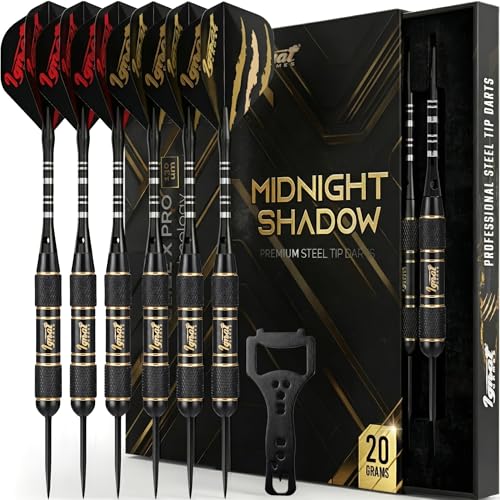
- Six darts with knurled brass barrels for accuracy and tighter grouping
- Comes with 16 spare GlideXPro flights in standard and slim shapes
- Sleek EVA case keeps the whole kit protected and giftable
Pick a Weight
Most darts weigh between 12 and 50 grams, but nearly everyone plays between 18 and 26. Soft-tip darts run lighter (usually 16–20 grams) because electronic boards cap the allowed weight.
Lighter darts demand a smoother, more deliberate throw, which helps beginners build technique. Heavier darts fly flatter and punch through bounce-outs, which is why many steel-tip players settle in the 22–26 gram range — here's how to dial in your dart weight.
Barrel Material: Brass vs. Tungsten
Brass and nickel-silver darts are cheap, and they're a fine way to learn what you like. Their downside is bulk: at a given weight, the barrels are fat, so three darts crowd each other in the treble bed.
Tungsten darts cost more but pack the same weight into a slimmer barrel. That's why the pros throw high-tungsten darts — tighter grouping means higher scoring, and the dense barrels resist wear for years.
A percentage on the packaging (80%, 90%, 95%) tells you how much tungsten is in the alloy. Higher percentages mean slimmer, pricier darts; 80–85% is plenty for most players.
Barrel Shape and Grip
Barrels come in three basic shapes: straight, torpedo (front-loaded), and bomb (center-weighted). None is "best" — the right shape is the one that sits naturally where your fingers grip.
Grip texture matters just as much. Knurled and ringed barrels lock into your fingers, while smoother barrels release cleanly if you tend to hang on too long.
What Should You Spend?
A solid brass starter set costs $10–20, and a good entry-level tungsten set runs $30–60. Skip the $100+ signature darts until you know your preferred weight and shape, because you'll likely change your mind after a few months of throwing. Most beginners end up between those two figures, and a realistic first darts budget of $25 to $50 buys a tungsten-alloy barrel with spare flights and shafts in the pack.
Whatever you spend on the darts, budget a few extra dollars for spare flights and shafts. They're consumables, and they break long before the barrels do.
How to Narrow It Down
Match the tip to your board, then pick a weight near 20 grams soft tip or 22–24 grams steel tip. Choose tungsten if it fits the budget, brass if you're just testing the waters, and a grip that feels secure without sticking to your fingers.
If you can, throw a friend's darts or a house set before you buy. Ten minutes of real throws tells you more than any spec sheet, and these beginner-friendly sets are safe first picks.
Common Questions
Why do professionals use tungsten darts?
Tungsten's density lets a dart be slimmer at the same weight. Slimmer darts group tighter in the trebles, and tighter grouping wins matches.
How often should you replace darts?
Barrels last years, so replace them only when the grip wears smooth or your setup preferences change. Flights and shafts wear out constantly — swap those the moment they're bent or torn.
Can you bring darts on a plane?
Yes, but pack them in checked luggage, since most airlines treat them as prohibited in carry-ons. Check your airline's policy before you fly.
Do flights change how a dart flies?
Absolutely — bigger flights add stability for heavier darts and softer throws, while slim flights cut drag for hard, fast throws. They're cheap, so experiment freely.
Buy one modest set, throw it for a month, and let your own grouping tell you what to upgrade.