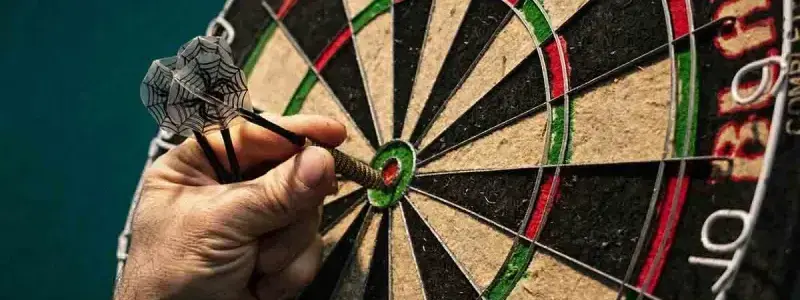
The 501 Strategy That Wins Ugly
Sixteen left, dart in hand — and it thuds into the 20, blowing past zero and busting the whole turn back to sixteen. Your opponent smiles, steps up, and takes out 40 like it's nothing.
That's how most 501 games are lost: not on bad throws, but on bad plans. Winning at 501 comes down to three phases — score fast, set up smart, and finish on a double you actually know.
Phase 1: Score Big Off the Treble 20
From 501, your only job at first is to tear the score down as fast as possible. That means throwing at the treble 20, worth 60 points — the highest-value bed on the board.
Don't aim at the whole 20 sector; aim at the treble itself. Miss slightly and you'll usually still catch a single 20, which keeps your average respectable.
Three treble 20s is the famous 180, but you don't need those to win. Consistent visits of 60–85 points will beat most casual players comfortably.
If the rules of the game are still fuzzy — double out, busting, who throws first — brush up on the 501 darts rules before working on strategy.
When to Switch to the 19
If your first dart lands in the 20 and blocks the treble, or the 20s just aren't falling, move to the treble 19. It's worth 57 — barely a downgrade — and a fresh target can reset a cold arm.
Pros do this constantly, and there's real logic behind it. Here's a full breakdown of why dart players go for 19.
Phase 2: Set Up Your Double
Once you're under about 170, stop throwing on autopilot. Every dart should now leave you a number you can finish from, because 501 must end on a double.
The best leaves are even numbers with escape routes: 32 (double 16), 40 (double 20), and 24 (double 12). If you miss into the single, you're still on an even number and can halve your way down.
Avoid leaving odd numbers late in the leg. An odd leave forces you to burn a dart on a single just to get back to an even finish.
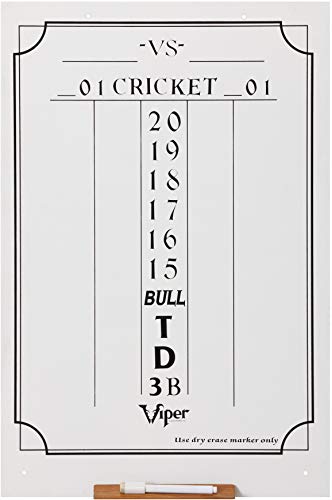
- Purpose-made layout tracks Cricket and 01 games at a glance
- Smooth surface works with any dry erase marker, and one comes included
- Mounting hardware is included for easy setup on a wall or cabinet door
Do the math before you throw, not after. Knowing exactly how the scoring works in 501 darts is what makes those setup shots automatic.
Phase 3: Know Your Checkouts
A checkout is a combination that takes you from your current score to exactly zero, ending on a double. The highest possible is 170: treble 20, treble 20, bullseye.
You don't need to memorize the whole chart. Learn the handful you'll actually face, and the rest follow the same patterns.
- 40: double 20
- 32: double 16
- 60: single 20, double 20
- 81: treble 19, double 12
- 100: treble 20, double 20
- 121: treble 20, single 11, double 25 (or treble 17, single 20, double 25)
The bust rule is why planning matters: score past zero, hit exactly 1, or reach zero without a double, and your whole turn is wiped. When in doubt, throw the dart that leaves a clean double rather than the hero shot.
Practice Doubles Like They Decide Games — Because They Do
Most players practice scoring and neglect finishing, then wonder why they lose close legs. Flip that ratio.
A simple drill: start at 32 and check out, then 40, then 50, working through the common finishes. Ten minutes of doubles practice per session sharpens the exact shot that wins the game.
Round it out with around-the-board work so your setup darts — singles like 11, 9, and 19 — don't let you down when a checkout demands them.
Small Edges That Add Up
Take the first throw when you can win the bull-up, because throwing first in a leg is a genuine advantage. You set the pace and force your opponent to chase.
Keep your routine identical under pressure: same stance, same grip, same rhythm on double 16 as on a throwaway dart. Composure is a skill you build in practice, not something you find mid-match.
Next game, pick your double before you're anywhere near it — then throw every dart with that finish in mind.