Pro Dartboards: What the TV Players Use
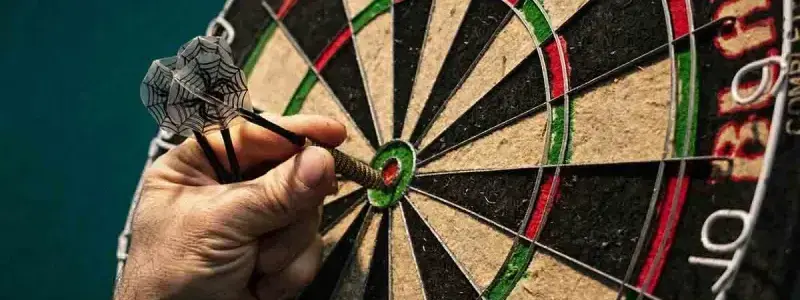
Professional dart players use regulation-size sisal bristle dartboards—the dense, tournament-quality boards made for steel-tip darts. The exact brand or model can change between competitions, but the formula stays the same: tightly packed sisal fibers, razor-thin dividing wires, and a surface tough enough to handle thousands of throws without turning into Swiss cheese.
What Kind of Dartboard Is That?
A professional dartboard is usually called a bristle board. Despite the name, it is not made from brush bristles or animal hair.
It is made from sisal, a strong natural fiber packed into a hard circular surface. When a steel-tip dart lands, the point pushes between the fibers instead of punching out a permanent chunk.
After the dart is removed, the fibers slowly move back together. Manufacturers call this “self-healing,” although the board does not completely erase every hole.
Think of it more like a thick carpet springing back after someone steps on it. The better the sisal, the longer the board keeps its shape.
Why Professionals Choose Sisal Boards
Professional players throw with speed, accuracy, and very little mercy for the board. A cheap paper board would wear out quickly under that kind of punishment.
Sisal boards are durable enough for long practice sessions and tournament matches. They also grip steel-tip darts well, reducing the chance of darts falling onto the floor.
Consistency matters just as much as durability. Professionals need every section of the board to react the same way, whether they hit the 20, the bullseye, or a tiny double near the edge.
A soft patch or damaged section could affect how a dart sticks. On a professional stage, nobody wants the board becoming part of the drama.
What Makes a Tournament Board Different?
The biggest upgrade is usually the wiring. Dartboards have metal dividers that separate every numbered scoring section.
Older or cheaper boards often use thick, rounded wires held down with metal staples. A dart that strikes one of those pieces can bounce out instead of scoring.
Professional boards use much thinner wires, often shaped to guide darts into a scoring section. This creates more room to hit the target and produces fewer frustrating bounce-outs.
The number ring around the outside is also removable. Players can rotate the board so the most-used sections do not wear out too quickly.
The 20 section usually takes the worst beating because it offers the highest possible score. Rotating the board spreads that damage across different areas.
Do All Professionals Use the Same Model?
No single dartboard model is used by every professional player everywhere. Tournament organizers choose an official board for their events, and that choice can change over time.
You may see high-end boards from major darts brands used on television. However, professional players often practice at home on a different tournament-quality board.

- Built to official tournament specifications for serious practice and match play
- Dual-density core improves dart retention and keeps the board playing consistently
- Ultra-thin wiring increases the scoring area and cuts down on bounce-outs
The brand is less important than the basic features. A regulation sisal board with thin wiring will feel much closer to professional equipment than an electronic or paper board.
Should a Beginner Buy a Professional Board?
A tournament-quality sisal board is a great choice for beginners, but the most expensive model is not necessary. A premium board cannot fix your aim any more than an expensive basketball hoop can fix your jump shot.
Look for dense sisal, thin embedded wires, a removable number ring, and standard measurements. These features provide a realistic playing experience without requiring the fanciest model available.
Avoid boards made from rolled paper if you plan to play regularly. They are cheaper, but they wear faster and do not respond like the boards used in serious steel-tip darts.
Electronic dartboards are different because they use plastic tips and small holes. They can be fun for casual games, but they are not the standard choice for major steel-tip professional competitions.
The Bottom Line
Professionals use regulation sisal bristle dartboards because they are durable, consistent, and designed to reduce bounce-outs. The official brand may change, but the board type remains the real answer.
For home practice, choose a good-quality sisal board with thin wires and rotate it regularly. That gives you the same basic playing surface the pros face when the lights come on and the crowd gets loud.
Related Questions
How far do professional players stand from the dartboard?
The throwing line is 7 feet 9¼ inches, or 2.37 meters, from the face of the board. The center of the bullseye is 5 feet 8 inches, or 1.73 meters, above the floor.
What kind of darts do professionals use?
Professionals use steel-tip darts on sisal boards. Many use slim tungsten barrels because tungsten creates a heavy dart without making it unusually wide.
How long does a bristle dartboard last?
A quality board can last for years, but its lifespan depends on how often it is used. Rotating it and avoiding damaged dart points can slow down wear.
What does self-healing mean on a dartboard?
Self-healing means the sisal fibers move back together after a dart is removed. The holes may still be visible, but they become less noticeable than holes in paper or wood.