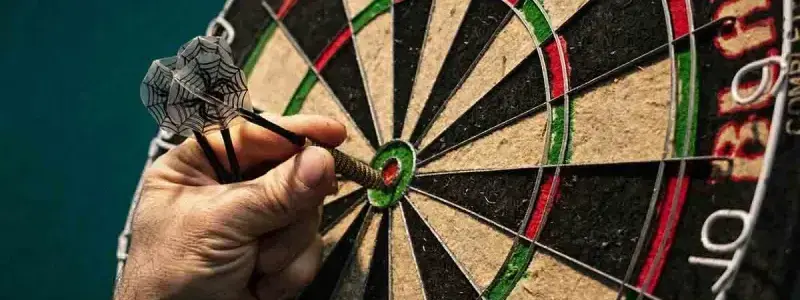
Around the Clock: The Official Rules
One and 2 fall to your first two darts, and for a moment Around the Clock feels easy. Then the 3 — wedged at the bottom of the board between the 17 and the 19 — swallows your next five throws.
That's the whole charm of the game. The rules take thirty seconds to learn, but the board makes you earn every single number.
What Is Around the Clock?
Around the Clock is a race to hit every number from 1 to 20, in order, before anyone else does. It's also played under the name Around the World, with only minor house-rule differences between the two.
You don't need any special equipment. A standard dartboard and three darts per player covers it.
Who Throws First
Decide the order before anyone aims at the 1. A coin toss works, or each player throws one dart at the bullseye and the closest dart goes first.
The Official Rules
- Each player throws three darts per turn, starting on the 1.
- The object is to hit every number from 1 to 20 in sequence.
- The numbers must come in order — after the 1 you aim at the 2, then the 3, and so on up to the 20.
- Once you hit your current number, you move straight on to the next one in the sequence.
- If you miss, you keep trying with any darts left in that turn; on your next turn, you resume from the same number.
- A dart thrown out of turn is void and doesn't count.
- The first player to work through 1 to 20 and hit the 20 wins.
How a Turn Plays Out
Say you're on the 5. Your first dart misses, your second lands in the 5, and your third catches the 6 — so you'll start your next turn aiming at the 7.
Your progress never resets. However long the 7 takes you, the 8 is still waiting right where you left off.
Popular Variants
Skip Ahead with Doubles and Trebles
In this common variant, hitting a double of your number jumps you one extra number ahead, and a treble jumps you two. It rewards players brave enough to aim at the thin rings instead of the fat singles.
Bullseye Finish
Some versions add one last stop after the 20: the bullseye. Until you land it, the player behind you still has a path back into the game.
Playing with a Group
Around the Clock works with any number of players, not just two. Everyone throws in a fixed order, and the game runs exactly as it does head-to-head. Bigger groups sometimes bolt an elimination layer onto the same climb — that's Nine Lives darts, where a turn without a single hit costs you one of your lives.

- 15 darts in one jar means plenty of spares for group play
- Anodized aluminum shafts with locking holes stay tighter than plastic rods
- Comes with extra flights, rubber O-rings, and a sharpener to keep points game-ready
That flexibility makes it a staple pick among darts games for groups — nobody sits out, and nobody needs to do math.
Why It Doubles as Practice
Most casual players camp on the 20 and never learn the rest of the board. Around the Clock forces you to aim at all twenty numbers, including the ones you'd normally never visit.
Play a few rounds and your weak segments announce themselves fast. That knowledge pays off in every other dart game you play.
Call closest to bull, start on the 1, and see who gets around the clock first.