Amethyst Darts: What You're Really Buying
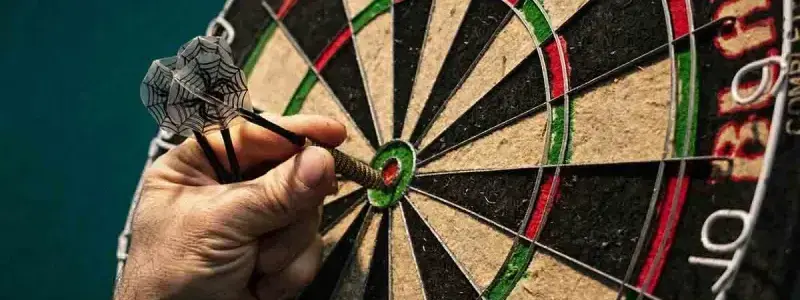
Purple flashes into the treble 20, and someone at the bar asks whether that dart is really tipped with gemstone. It isn't — and the truth behind "amethyst" darts is more useful than the myth.
There's No Gemstone on the Tip
Dart tips come in exactly two materials: steel for bristle boards and plastic for electronic ones. An actual amethyst point would shatter on its first hard impact.
When "Amethyst" appears in a dart's name — Red Dragon's Amethyst range is the best-known example — it refers to a rich purple coating on the barrel. The advantages are real, but they live in that coating, not in any crystal.
| The myth | The reality |
|---|---|
| A gemstone point that pierces better | Standard steel or plastic tips |
| A crystal that sharpens your accuracy | A purple coating that improves visibility |
| Exotic tip material | Barrel protection and good looks |
A Coating That Protects the Barrel
A quality coating adds a protective layer over the metal. It helps the grip machining stay sharp instead of slowly smoothing out under your fingers.
It defends the finish too. Scratches from board contact and wear from everyday handling land on the coating before they ever reach the barrel.
Durable finishes save money in the long run. Equipment that doesn't wear down quickly means fewer replacement sets over the years.
None of this is unique to purple, to be clear. Any well-applied coating protects the same way — amethyst is simply the shade this range wears.
Purple You Can See From the Oche
Color never changes how a dart flies. What it changes is how clearly you can read the board after each throw.
A distinctive purple stands out sharply against the dartboard. That makes it easier to see exactly where your first dart sits and to group the next two around it.
The Confidence Factor
Darts are personal equipment. A striking finish you enjoy throwing can genuinely lift your confidence at the oche — even though the color itself will never move a dart an inch.
If purple makes you step up feeling sharper, that's a legitimate edge. It's just not a magical one.
What Actually Decides Performance
If you're choosing between sets, look past the finish first. Balance shapes the path a dart takes, and a well-balanced barrel gives you a consistent, repeatable flight.

- Front-weighted barrels support a comfortable and controlled three-point grip
- Deep grooves and triple-milled surfaces provide a secure grip for more consistent throws
- The included storage box keeps up to 12 darts and spare parts organized and protected
Material outranks color too. Barrels come in brass, nickel-silver, and tungsten alloys, each trading off durability, slimness, and cost — our brass vs. nickel vs. tungsten comparison breaks it down.
Get those fundamentals right and the coating becomes a happy tiebreaker. Our guide to what kind of darts you should buy walks through the full checklist.
Take Care of the Tips You Do Have
Whatever the barrel wears, the tip does the work. Check it regularly for damage, clean it after use, and store your darts properly between sessions.
Wipe the barrels down while you're at it. Grip machining collects oils from your hands, and a coated finish is easiest to keep clean before grime settles in.
Steel tips can be lightly touched up with a dart stone — here's how to sharpen dart points properly. Worn soft tips don't get repaired at all; you just screw in a fresh one.
Buy the purple set if it makes you smile — just make sure the balance, weight, and barrel underneath earn their spot first.