
Dart Shafts: The Part You Forgot Matters
Your league partner watches three darts wobble into the board, then asks quietly, "When's the last time you looked at your stems?" You've been blaming your release for a month, but the fix might be screwed in right behind the barrel.
The dart shaft — also called the stem — is the long, thin piece between the front of the dart and the flight. It holds the whole back end together, and it shapes how the dart flies more than most players give it credit for.
What a Dart Shaft Does
The shaft is the link in the dart's chain. It carries the flight at the correct distance behind the barrel so the dart stays balanced in the air.
Because it's neither the part you grip nor the part you see spinning, it's easy to ignore. Ignore it long enough and it quietly costs you consistency.
Shaft Materials
Shafts come in a range of materials, and each has trade-offs.
Plastic and nylon shafts are cheap and come in every color imaginable. The catch is durability — they won't outlast the pricier options.
Aluminum shafts are stronger and longer-lasting. They can run a bit heavier, which changes the feel of the dart slightly.
High-tech materials like carbon fiber and titanium sit at the top of the range. You pay more for strength without the extra bulk.
There are also spinning wire-style stems built to let flights rotate. Here's why some players use wire dart shafts.
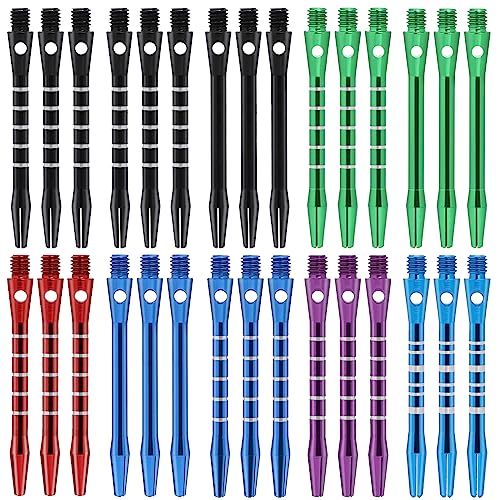
- 30 aluminum 2BA shafts with O-rings cover replacements for seasons of play
- Lock-hole design lets you tighten shafts securely so they don't work loose
- Two lengths and multiple colors let you tune the look and balance of each dart
Shaft Length
Standard shafts usually run between 1.5 and 3 inches. That small range changes the dart's behavior more than you'd expect.
Longer shafts can add stability and help the dart fly straight. Shorter shafts give many players a feeling of more control over the throw.
Neither camp is wrong — it comes down to your throwing style. For a deeper breakdown of the options, see our guide to dart shaft lengths.
Matching Shafts to Flights
Shafts and flights work as a pair, so check compatibility before you buy. Some shafts are designed to hold specific types of flights.
If you're rethinking the back end of your dart, start with our guide to dart flights. Pick the flight shape first, then choose a shaft that fits it.
Shafts and Dart Weight
Weight talk usually refers to the whole dart, not the shaft alone. Standard darts fall between 18 and 26 grams, and something like a 13-gram dart is considered quite light.
Heavier darts feel stable in the hand, which suits some throwing styles. Lighter darts can fly differently, so the right weight is another personal-preference call.
Your shaft material plays a small part in that total. Switching from nylon to aluminum, for example, nudges the balance toward the back.
When to Swap a Shaft
Shafts take real abuse — darts landing in a tight group hit each other's stems constantly. A bent or cracked shaft will scatter your grouping no matter how clean your throw is.
Keep a few spares in your case and swap at the first sign of damage. They're one of the cheapest parts on the dart.
Try one different shaft length for a full practice session — your grouping will tell you everything you need to know.