
Darts Scoring: Stop Nodding, Start Knowing
Forty left, two darts in hand, and everyone at the table is doing the same silent math. Scoring is the real drama of darts — throwing is just how you move the numbers.
The Basic Idea: Count Down to Zero
The classic dart games, 301 and 501, run on one simple rule. Each player starts with that number, subtracts whatever they score each turn, and races to reach exactly zero first.
Players take turns throwing three darts, then total them and take the result off their remaining score. Most versions add a catch at the end — you finish on a double — which is covered in the full 501 darts rules.
The two games play the same way and differ only in starting total. If you're unsure which to play, here's how 301 vs. 501 compare.
What Each Dart Is Worth
Every numbered segment on the board scores its face value from 1 to 20. Two thin rings change that value fast.
- Double ring (outer): twice the segment's number.
- Treble ring (inner): three times the segment's number — treble 20 scores 60, the most one dart can earn.
- Outer bull: 25 points.
- Inner bull: 50 points.
Score all three darts, add them up, subtract from your total. That loop is the whole game.
Scores Worth Knowing
A perfect turn is 180 — all three darts in the treble 20 — and a 100-point turn is called a "ton." Those two numbers are the ones you'll hear shouted in any dart room.
Watch the bottom end too. In double-out games, dropping your total below two is a "bust," which wipes the whole turn and resets your score to where it began.
Keeping Score by Hand
The traditional method is a scoreboard next to the dartboard with a column per player. After each turn you write the score thrown and the new remaining total underneath.
Keeping the remaining total visible is what makes the endgame tense — everyone can see exactly what you need. When you get near zero, a darts checkout chart tells you which combination finishes the leg.
Scoreboard Options
Scoreboards vary in size, shape, and material, and the right one is mostly personal preference.
Chalkboards and whiteboards
These bring the traditional pub feel to the game. You do the subtraction yourself, which sharpens your mental math and adds a little challenge of its own.
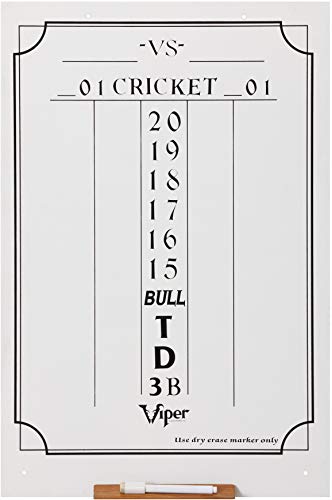
- Purpose-made layout tracks Cricket and 01 games at a glance
- Smooth surface works with any dry erase marker, and one comes included
- Mounting hardware is included for easy setup on a wall or cabinet door
Digital scoreboards
Digital models often come with pre-programmed games and automatic calculations. You enter what you threw and the machine handles the math instantly.
Pen and paper
No scoreboard yet? A notepad works fine — draw two columns, subtract as you go, and play on.
Why Bother Keeping Score Properly
A visible, running score keeps the game organized, fair, and honest. Nobody argues about who's winning when the board shows it in plain numbers.
It also frees your head. When the scoreboard remembers the totals, you can put all your attention on the next throw.
Chalk up before the first dart flies — the game's better when the numbers are up where everyone can see them.