501 Scoring: Simple Until It Suddenly Isn't
The chalker wipes 501 off the board and scrawls 361 in its place — one visit, three darts, 140 gone. Your opponent hasn't even finished his beer, and you're still not sure how the math on that scoreboard works.
Start at 501, Race to Zero
Every player (or team) begins a leg with 501 points. You take turns throwing three darts per visit, and everything you score gets subtracted from your total.
The goal is simple: be the first to reach exactly zero. There's a catch on the final dart, though, and it's where most games are won or lost.
What Each Dart Is Worth
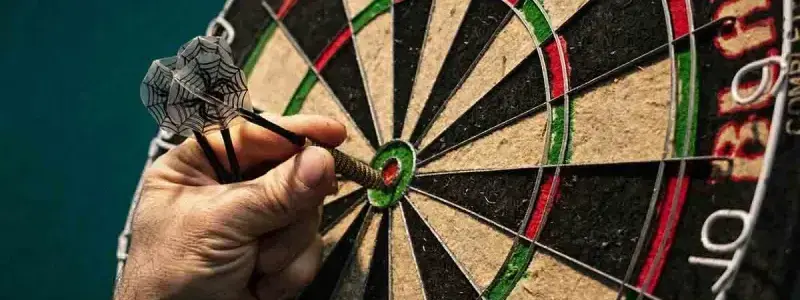
The board's numbered segments run from 1 to 20, and where your dart lands decides the multiplier:
- Single (the large plain areas): face value, so a single 20 scores 20.
- Double (the thin outer ring): twice the number, so a double 20 scores 40.
- Treble (the thin inner ring): three times the number, so a treble 20 scores 60 — the best single dart on the board.
- Outer bull (green ring): 25 points.
- Inner bullseye (red center): 50 points, and it counts as a double (D25).
Miss the board or bounce out, and that dart scores nothing. If you're curious why the center isn't the top prize, here's what the bullseye is actually worth.
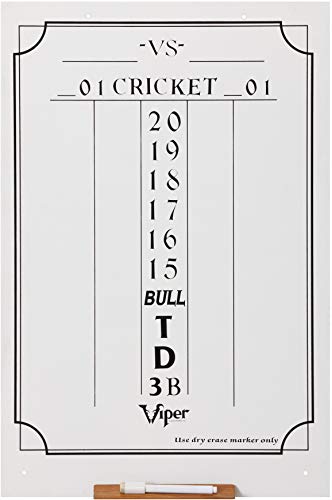
- Purpose-made layout tracks Cricket and 01 games at a glance
- Smooth surface works with any dry erase marker, and one comes included
- Mounting hardware is included for easy setup on a wall or cabinet door
How a Turn Plays Out
Say you're on 501 and hit treble 20, single 20, and single 5. That's 60 + 20 + 5 = 85, so the scorer subtracts it and writes 416.
That's all the running math there is — add your three darts, subtract from what's left. The famous "180!" call just means someone landed all three darts in the treble 20.
The Double-Out Rule
You can't finish 501 with any old dart. The throw that takes you to exactly zero must land in a double — the thin outer ring — or the inner bullseye, which counts as double 25.
So if you're left on 32, you need double 16 to win. Hit a single 16 instead and you're on 16, now needing double 8.
Busts: When a Turn Doesn't Count
A visit is a "bust" if you go below zero, land exactly on zero without a double, or leave yourself on 1 (no double can finish from there). None of that turn's darts count.
Your score resets to whatever it was before the visit, and play passes to your opponent. That's why good players plan their last few darts instead of just throwing big.
Checkouts Worth Knowing
A "checkout" is any score you can finish in one visit, and the highest possible is 170: treble 20, treble 20, bullseye. Anything at 170 or below (minus a few impossible numbers like 169 and 168) is theoretically finishable.
Players love leaving 32 because double 16 has a friendly safety net — hit the single and you're on 16, still on an even double. Working the numbers down to a favorite double is half the game, and there's a full guide to the best strategy to win at 501.
Quick Answers
What if I score more than I have left? That's a bust — the turn is void and your score reverts to where it stood before the visit.
Can 501 end in a tie? No. Someone has to reach zero first, and matches are usually played over an odd number of legs so there's always a winner.
What's "three in a bed"? All three darts in the same segment during one visit. It doesn't earn a bonus in 501, but it's a sign of a seriously consistent throw.
Who scores the game? Traditionally a chalker marks each visit and the remaining total, though most casual players now use a phone app — here's how to score darts the old-fashioned way.
Chalk up 501, aim for the treble 20, and start planning your double before you need it.