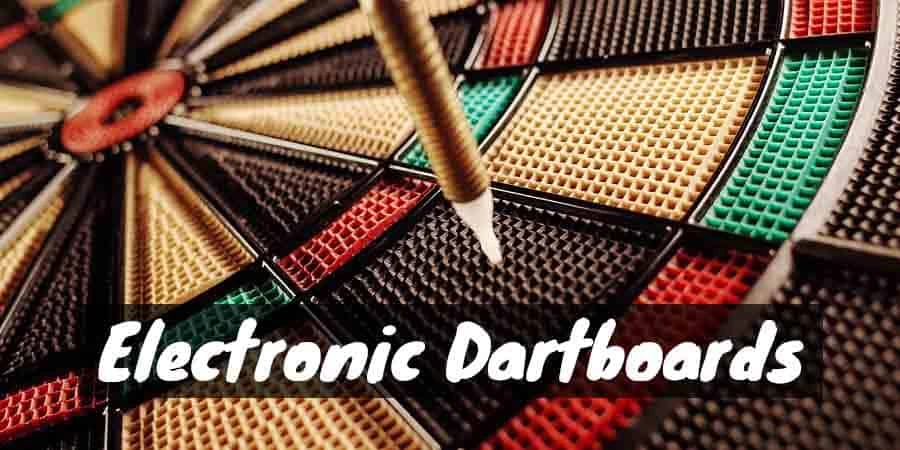
Electronic Dartboards: Cheating or Genius?
Beep. The board flashes your score before your third dart stops wobbling — no chalk, no mental math, no debate about whether that was a triple 19 or a stray 7. Back at the pub, someone is still squinting at a scoreboard doing subtraction in their head. That gap is exactly what electronic dartboards were built to close.
How an Electronic Dartboard Works
The playing surface is a grid of plastic segments, each sitting over a pressure sensor. When a soft-tip dart lands, the segment registers the hit and the board scores it instantly on an LED or LCD display.
Because the board is doing the counting, it can also run the game itself. It tracks turns, announces winners, and handles rule variations you'd otherwise need a rulebook for.
Electronic vs. Traditional Bristle Boards
A bristle board with steel-tip darts is the classic setup — quiet, tournament-standard, and unbothered by dead batteries. But it keeps no score, and steel points are unkind to walls, floors, and bare feet.
An electronic board trades some of that tradition for convenience and safety. The soft, rounded dart tips make it the better fit for families, apartments, and beginners picking up the game.
Expect a few honest trade-offs, though. Electronic boards are louder on impact, bounce-outs are more common, and most need an outlet or batteries nearby.
Games Beyond 501
Built-in game libraries are where these boards shine. Even mid-range models ship with dozens of games — Cricket, Round the Clock, Count-Up, and novelties like Tic-Tac-Toe Darts.
Most boards handle four to eight players and include computer opponents with adjustable difficulty. That means solo practice never has to feel like solo practice.
Some models go further with Bluetooth and app connectivity, letting you play live opponents anywhere. If that appeals to you, see our guide to online dartboards.
What to Look For When Buying
Start with segment quality. Tournament-grade thermoplastic segments with thin spider dividers catch more darts and survive years of abuse.
Then check the display and game count. A bright, readable score screen matters more in daily use than a long spec sheet.
Reliable brands include Arachnid, Viper, and Gran Board. The Arachnid Cricket Pro 800, Viper 800, and Gran Board 3 LED Bluetooth are the models most often recommended, from family boards up to tournament practice.

- 40 games and 315 variations keep league nights and family play fresh
- Tournament-quality target with automatic scoring takes the math out of the game
- Popular Cricket modes are built in for the formats players actually ask for
The Darts You'll Need
Electronic boards require soft-tip darts — steel points will destroy the sensor segments. Most boards specify a maximum dart weight, usually 18 to 20 grams, so check the manual before you buy a set.
Keep spare tips on hand. Plastic points bend and snap with normal play, and swapping one takes seconds.
Setting It Up Right
Mount the board with the bullseye 5 feet 8 inches off the floor, the same height as a bristle board. The throw line for soft-tip play sits 8 feet from the face of the board — slightly farther back than the steel-tip distance.
Give it a spot near power if your model uses an AC adapter. A clear throwing lane with no foot traffic finishes the job.
Casual Toy or Serious Board?
Both, depending on the model. Budget boards are party machines, while tournament-grade models are used in real soft-tip leagues around the world.
Soft-tip darts has its own competitive scene, with electronic boards at the center of it. Buying one doesn't mean you've stopped taking the game seriously.
Pick a board with solid segments, grab a set of soft-tips under 20 grams, and let the machine do the math.