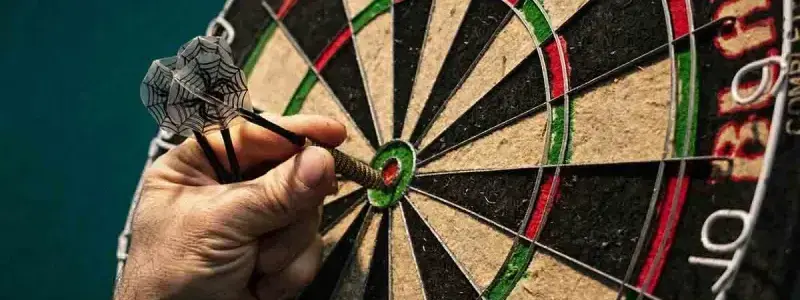
Dart Decor: Make Your Setup Look Legendary
You flip on the light in your game room and the board just hangs there on a bare beige wall, looking like an afterthought. Ten minutes of decor planning is the difference between "spare room with a dartboard" and a corner people fight to play in.
Dart decor is how you turn the space around the board into part of the game. Here's what works, what it costs, and what you can build yourself.
Start With the Board Wall
The wall behind your board is the focal point of the room, so treat it like one. A backboard or corkboard surround protects the drywall from strays and instantly frames the board like a piece of art.
A dartboard cabinet does the same job with more polish. Closed, it reads as furniture; open, it's a scoreboard, dart holder, and frame in one.
Stain or paint the cabinet to match your room, and the board stops looking bolted on. Dark wood leans classic pub, while matte black leans modern game lounge.
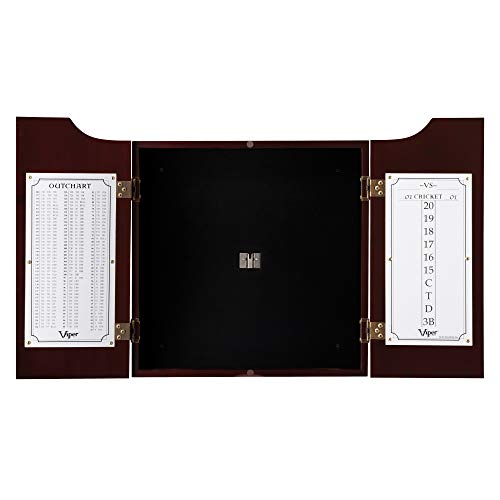
- Solid pine construction with box joints and bronze hinges is built to last
- Main compartment fits all official tournament-sized bristle dartboards
- Dry erase scoreboard and out-chart on the doors keep scoring close at hand
Wall Art and Signs
Vintage-style dart and pub signs are the cheapest way to set a theme, and most run $15–$40. Cluster two or three near the throw line instead of scattering them around the room.
Framed prints of famous checkouts, board diagrams, or old tournament posters give the wall a story. If you play a lot of cricket, a framed scoring chart doubles as decor and a cheat sheet for guests.
Skip the temptation to cover every wall. One themed wall plus a few accents looks intentional, while wall-to-wall signage looks like a gift shop.
Lighting Sets the Mood
Good light is decor that also improves your game, since shadows on the board make scoring harder. A ring-style dartboard light kills shadows and makes the board glow like it's on stage.
Around the rest of the room, warm LED strips or a neon-style "Darts" sign add pub atmosphere without the glare. Keep bright task lighting on the board and softer accent lighting everywhere else.
Floor and Throw-Line Decor
A dart mat is the most functional decor you'll buy. It protects the floor from bounce-outs, marks the oche at the correct distance, and anchors the whole setup visually.
If a rubber mat feels too utilitarian, a dart-themed rug with a printed throw line does the same job with more personality. Either way, you've turned a rule of the game into a design feature.
Small Accents That Tie It Together
Little pieces finish the theme without much money. Think dartboard coasters, a dart-shaped bottle opener, flight-print throw pillows, or a caddy that displays your spare darts instead of hiding them.
Trophies, league patches, and a chalk scoreboard add the personal layer that store-bought decor can't. A wall that shows your own games beats one that only shows merchandise.
DIY Ideas
A retired dartboard is free wall art. Frame it as-is with all its battle scars, or paint over the sisal for a custom clock or serving-tray project.
Old darts work too. Mount a set in a shadow box, or epoxy a few into drawer pulls and coat hooks for the game room door.
Even the backboard can be DIY: a hexagon of cork tiles or a ring of reclaimed wood costs a fraction of a retail surround and looks custom because it is.
Budget Guide
Under $50 gets you signs, coasters, a poster, or a basic light. That's enough to make the board wall feel deliberate.
The $50–$150 range covers a quality mat, a cabinet, or a proper lighting ring. Past that, you're into custom cabinets, neon, and bar furniture — worthwhile only after the basics are handled.
Spend on the board wall first, lighting second, and accents last. That order gives you the biggest visual upgrade per dollar.
Pick one project — backboard, light, or mat — and finish it this week; the rest of the room will follow.