
Dartboard Cabinets: Class Up or Cover Up?
Third dart of the night sails wide and smacks bare drywall, punching one more gray crater beside the board. A dartboard cabinet exists to end exactly that scene.
What a Dartboard Cabinet Is
A dartboard cabinet is a wall-mounted box, usually square or rectangular, with doors that swing open to reveal the board inside. Shut the doors and your setup reads as a clean piece of furniture instead of sports equipment.
Most cabinets carry scoreboards on the inner faces of the doors, so you can chalk up a leg without buying anything extra. Many also build in slots or compartments that give your darts a permanent home.
Styles run from sleek and modern to rustic, in solid wood or engineered materials. That range is the point — a cabinet is as much game-room decor as it is gear.
What It Actually Does for You
Shields your wall
In a tight game, a missed dart doesn't land in the board — it lands in your paint. The open doors sit beside the board and act as a barrier that catches rogue throws before they reach the wall.
Preserves your board
A board left exposed collects dust and picks up accidental knocks between sessions. Closing the cabinet doors when you're done blocks both.
Keeps your gear organized
Built-in storage means your darts live with the board instead of scattered across a shelf. When friends show up, everything you need is behind two doors.
Cabinet or Backboard?
A cabinet adds storage, scoreboards, and looks, while a plain backboard simply gives you a bigger protective zone around the board. If your throws still spray wide, a dart backboard covers more wall for less money.
The two also work together. Plenty of players mount a cabinet over a larger backing surface and get style plus full coverage.
How to Choose One
Cabinets range from basic budget models to high-end pieces, so decide what you're paying for before you shop:
- Fit: confirm the cabinet is sized for your board so it closes cleanly with the board mounted.
- Doors: inner-door scoreboards are worth having if you play x01 or cricket on paper.
- Storage: look for slots or compartments that hold your darts and spares.
- Material: solid wood feels and lasts like furniture; engineered materials keep the price down.
- Style: pick a finish that fits the room, since the doors are what you'll see most of the time.
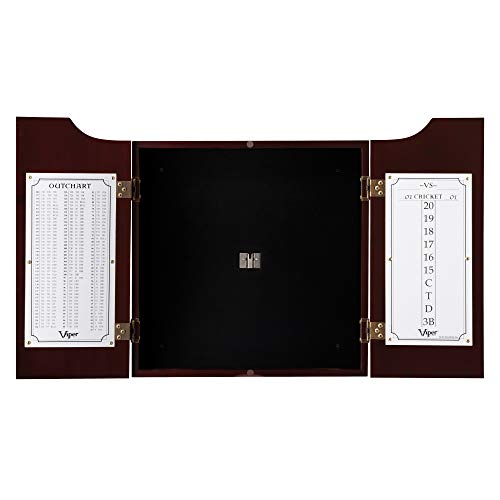
- Solid pine construction with box joints and bronze hinges is built to last
- Main compartment fits all official tournament-sized bristle dartboards
- Dry erase scoreboard and out-chart on the doors keep scoring close at hand
Hanging It Right
A cabinet plus board weighs a lot more than a board alone, so anchor it into studs or use wall anchors rated for the load. Position it so the bullseye ends up at regulation height — the exact numbers are in our guide to dartboard height and distance.
Leave clearance for both doors to swing fully open without hitting shelves or trim. A door that only half-opens blocks the scoreboard and crowds your sight line.
Darts that miss low can still chew up the floor and baseboard, so think past the cabinet too. Here's how to protect walls and floors from darts.
Keeping It in Shape
Make closing the doors after the last leg a habit — that alone prevents most dust buildup and accidental damage. Beyond that, wipe it down like any other furniture and snug up the hinges if the doors start to sag.
Hang it straight, shut it when you're done, and the cabinet will outlast a stack of dartboards.