
7 Dart Strategies Casual Players Never Use
You're sitting on 32 with two darts in hand, and your opponent needs 120 — one clean double 16 ends the whole game. Moments like that aren't won by aim alone; they're won by the seven strategies below.
1. Don't Chase the Treble 20
Pros hammer the treble 20 because they can hit it three times out of three. Miss it by a centimeter, though, and you're in the 1 or the 5.
The board is built to punish greed — every big number sits between two small ones. That's why smart amateurs aim at the 19 instead, where a miss lands you on 7 or 3.
You'll still score well when you hit, and you won't crater when you don't. Here's the full logic behind why so many players go for the 19.
Let your opponents make the rookie mistake of going big every turn. You'll bank steady mid-range scores while they bounce between 60 and 1.
2. Leave Yourself Even Numbers
In 501 or 301, you can't finish until you're set up on a double, so work your score down to an even number — ideally a power of two like 32, 16, or 8. Miss the double and clip the single, and you're still on an even number with a double waiting.
Leave yourself an odd number like 3 or 9 and you'll burn a dart just to get back to even. That one wasted throw is often the whole match.
Checkout routes matter more as you improve, so it's worth learning the best strategy to win a 501 game.
3. Know the Rules
You can't strategize around rules you don't know. Plant your foot past the throw line, for example, and your turn can end on the spot.
Every game mode treats the board a little differently — doubles and trebles don't always mean the same thing. Playing Cricket with 501 habits wastes darts and turns.
If you're starting out, study Cricket and 501/301 first. They're the two formats you'll see most, from bar leagues to televised professional play.
4. Know the Scoring
Scoring knowledge tells you how close you are to winning, and you can't plan a finish without it. It also protects you from a scorekeeper's mistake, honest or not.
Before you enter a match, you should be able to keep the score sheet yourself. Know exactly what the double and treble rings are worth in the game you're playing.
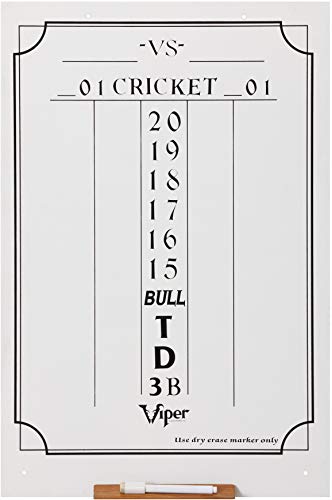
- Purpose-made layout tracks Cricket and 01 games at a glance
- Smooth surface works with any dry erase marker, and one comes included
- Mounting hardware is included for easy setup on a wall or cabinet door
Some formats add a twist: in English Cricket, you don't start totaling points until you've banked 40 first. Check how your game handles that before your first throw.
5. Find Your Technique
There's no single correct way to throw a dart — there's the way that works for you. Test different grips, stances, and release points, then commit to the combination that groups tightest.
Once you've found it, drill it until it's muscle memory. Consistency beats raw power every time.
Record yourself throwing, too, because you can't see your own stance mid-throw. A short video shows flaws you'd never feel, and this guide to throwing darts accurately will help you fix them.
6. Aim a Touch High
Darts don't fly straight — every throw arcs, no matter how hard you sling it. That means your dart lands a little lower than where you aimed.
The fix is simple: aim slightly above your target. How much depends on your darts, since each barrel and flight setup arcs differently.
Throw a few practice rounds aiming a couple of centimeters high and watch where they land. Adjust until your point of aim and point of impact match.
7. Play to Your Strengths
Every player has a natural pattern — some live on the bullseye, others are deadly on doubles. Throw a few solo games and track what you actually hit most.
If one side of the board is kinder to you, build your strategy around it. Honing what you're already good at wins more games than fighting your weaknesses.
Tips from the Pros — Raymond Van Barneveld
Related Questions
- What's the best way to improve your aim in darts?
Practice regularly with a consistent throwing motion. A comfortable, repeatable grip and stance matter more than any trick.
- How important is the follow-through when throwing darts?
It's crucial — a full follow-through keeps you balanced and sends the dart along the line you intended. Cutting it short pulls throws off target.
- What's the most effective way to score points in Cricket?
Close your numbers (15 through 20 plus the bull) by hitting each three times. Then pile up trebles on open numbers while your opponent's still closing.
- How can you avoid darts bouncing off the board?
Keep your tips sharp and your flights secured, and throw with a smooth, controlled motion. Worn equipment causes most bounce-outs.
- Is it better to aim for the bullseye or treble 20 in 501?
Treble 20 scores 60 to the bullseye's 50, so it's the better target most of the time. Save the bull for checkouts and specific finishes.
Pick one strategy from this list and run it for your next three games before adding another.