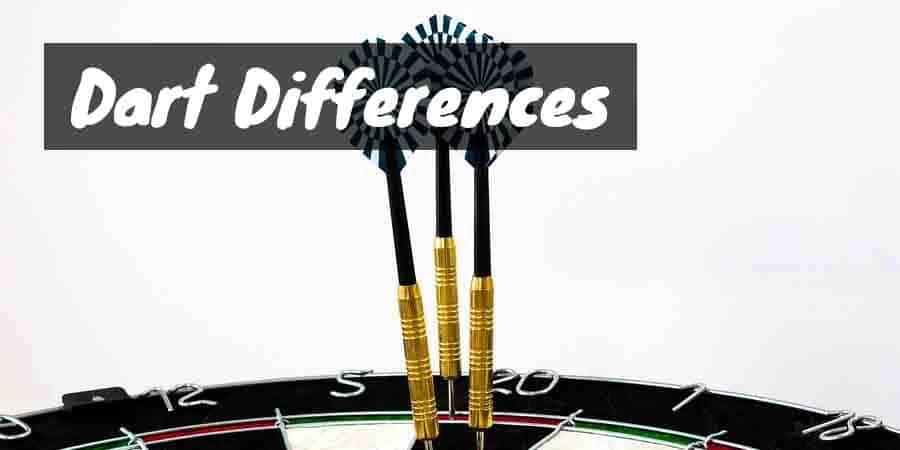
Steel, Soft, or Bar Darts: One Isn't for You
Halfway into game night, someone's steel dart has left another gouge in the host's electronic board. Steel, soft, and bar darts aren't interchangeable — each one is built for a different board and a different room.
The Three Types at a Glance
| Steel tip | Soft tip | Bar darts | |
|---|---|---|---|
| Tip | Sharp steel point | Soft plastic | Harder plastic or blunt magnetic |
| Board | Bristle | Electronic | Whatever the bar hangs |
| Weight and feel | Heavier — about 20–30g total | Lighter | Magnetic versions are front-heavy |
| Best for | Traditional and professional play | Homes, families, automatic scoring | Casual games in a crowded room |
Steel Tip: The Traditional Standard
Most professional games are traditionally played with steel-tipped darts. That fits the sport's origins as a military pastime, back when the "darts" were actual metal spearheads and arrowheads.
The sharp metal tip pierces a bristle board and embeds cleanly. At roughly 20 to 30 grams, the extra mass helps the dart fly true instead of drifting off course.
Durability is the other big win. A steel-tip dart won't bend or snap unless it's seriously abused, which is why pros who throw constantly see them as money well spent.
They're not automatically the beginner's pick, though. Even durable darts break when used carelessly, so many players hone their skills on softer gear before going full traditional.
We've covered the type in depth in steel tip darts explained.
Soft Tip: Safety First, Scoring Included
Soft-tipped darts answered the game's move into homes and bars. The soft plastic tip does far less damage when a dart bounces out and finds a person, a pet, or the drywall.
That makes them the obvious pick for households with children or pets. A miss bounces off the wall instead of embedding in it.

- 21 matched 17-gram darts keep group play going through worn tips and lost darts
- Knurled nickel-silver barrels with precision rings give a secure, consistent grip
- Twist-top storage jar keeps the whole set organized at home or on the road
They're also the only sensible partner for electronic dartboards, which track your hits and tally the score for you. The plastic point embeds in the board's soft face, while a steel point would shred an electronic board over time.
The trade-offs are real, though. Soft tips wear down quickly, and a bent or broken point is dead weight until you replace it.
They're lighter too, which changes the throw. Finding the center of gravity takes practice, and a light dart drifts more easily in moving air — though the touch you build transfers nicely back to steel tip later.
One more rule: don't aim them at a bristle board. They'll mostly bounce straight off and take your score with them.
Here's the fuller picture on what a soft tip dart is.
Bar Darts: Ask Before You Throw
"Bar darts" is less a spec and more a house policy. Bars with serious league throwers may run bristle boards and steel tips, but most don't want the wall holes and injury risk.
The common compromise is soft tip. Some houses stock harder plastic tips that add a bit of weight for regulars while staying safe.
Then there's the magnetic dart, the most casual option of all. A blunt, magnet-coated tip clings to a magnetic board — no sharp points anywhere in the room.
Accuracy is where magnetic darts give it all back. The heavy magnetic nose makes the dart arc fast and hard to balance, the stick isn't guaranteed, and without electronics there's no precise read on where you hit.
Playing somewhere new? Ask what's allowed first — the house always picks the darts, and our guide to bar darts covers the etiquette.
Which Type Should You Buy?
Buy for the board you'll actually face. A bristle board at the club means steel, an electronic board at home means soft tip, and casual bar nights mean whatever the house hands you.
Still torn? This video walks through the choice.
Match the dart to the board first, your throw second, and the traditionalists' opinions a distant third.