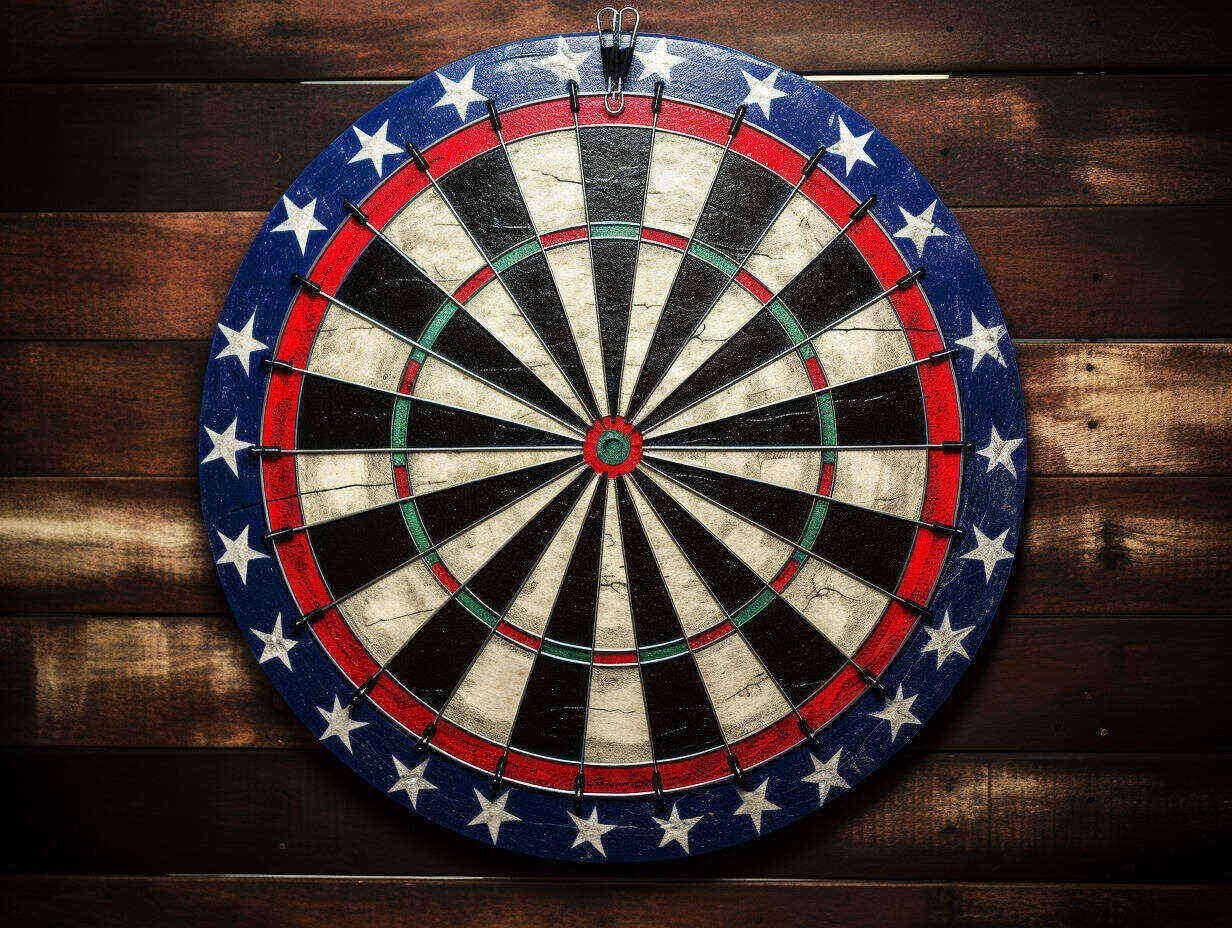
American Darts: The Game the East Coast Hid
Turkey feathers on the darts, basswood under the wires. One step inside a Pennsylvania social club and you can tell this isn't the darts you grew up throwing.
American darts is a homegrown variant with its own boards, its own featherweight darts, and a baseball-style scoring system. Here's what makes it different and how the game is played.
What Is American Darts?
American darts grew up in the United States, mainly in eastern Pennsylvania around Philadelphia and the coal regions. It keeps the core of darts — precise throws at a numbered circle — but changes the board, the darts, and the scoring.
The result feels familiar and foreign at the same time. Players who dominate on a standard board often need a stretch of humbling games to adjust.
The Board and the Darts
An American dartboard is wood, usually basswood or poplar, instead of sisal fiber. Thin wires or printed lines mark the scoring areas.

- Regulation compressed sisal surface heals around steel tips for a long playing life
- Rotating number ring spreads out wear to extend the board's lifespan
- Includes six steel tip darts so you can start playing right out of the box
The board keeps the familiar ring of twenty numbered wedges around a bullseye, but the numbers run in a different sequence. There's also no treble ring, which reshapes how you chase a big score.
The darts are the real conversation starter. They're wooden, much lighter than standard darts, and finished with turkey-feather flights.
Those feathers change everything about how the dart flies and lands. Reading that flight path is a skill of its own, and it's half the fun of switching over — a bigger shift than the usual dartboard differences you'd compare at a shop.
How the Scoring Works
American darts runs on innings, much like baseball darts. Each inning corresponds to a number on the board, and your job is to hit that inning's number as many times as you can with your turn's darts.
That structure changes the strategy. You're not just throwing accurately — you're deciding when to attack a number, when to close out an inning, and how to disrupt what your opponents are building.
League and club rules vary from house to house, so confirm the details before a match. Our guide to the official rules of American darts breaks down the full framework.
Where It Came From
The game dates to the early 20th century in the anthracite coal regions of northeastern Pennsylvania. Miners threw darts to unwind after long shifts underground.
It spread fast, moving from mining towns into local pubs and social clubs. The rules and equipment evolved along the way into the distinct game played today. Pennsylvania is also long-standing dart ball country, a church-league game thrown at a wooden board painted as a baseball diamond.
A century later, the community is still the point. From neighborhood bars to national leagues, American darts scenes welcome everyone from curious beginners to lifelong players.
American Darts vs. Standard Darts
| Feature | American darts | Standard darts |
|---|---|---|
| Board | Wood (basswood or poplar) | Sisal fiber |
| Scoring rings | No treble ring | Doubles and trebles |
| Darts | Light, wooden, turkey-feather flights | Metal barrels, plastic flights |
| Scoring | Inning-based, like baseball | Running point totals |
The core essence — skill, precision, nerve — carries across both games. Everything around it gets rebuilt.
Tips for Your First Games
Spend your first sessions just learning the wooden darts. The feather flights arc differently, and muscle memory from heavier darts will betray you early on.
Then work on inning discipline. Piling hits on the right number at the right time beats scattering good throws across the board.
Finally, watch your opponents' totals as closely as your own. American darts is a player-versus-player fight, and blocking a run can matter as much as building one.
Gearing Up
You only need two things: an American dartboard and a set of American darts. Quality matters for both, since a flat board face and consistent feathers directly affect how true your throws fly.
There's no one right setup beyond that. Try a few dart weights and find what feels comfortable in your hand.
Watch It Played
Seeing a match makes the rhythm of innings click faster than any rulebook.
Track down a wooden board, pick up a set of feather darts, and find out how your aim translates.